Energy Edge Computing
Local observability and governed data delivery for distributed energy assets and operational facilities.
Energy operations need timely, trustworthy context at the point where equipment and people must act. Edge computing keeps field acquisition, validation, local history, and bounded operational rules close to meters, controllers, generation assets, and facilities-then delivers selected outcomes to the systems and teams that need them.
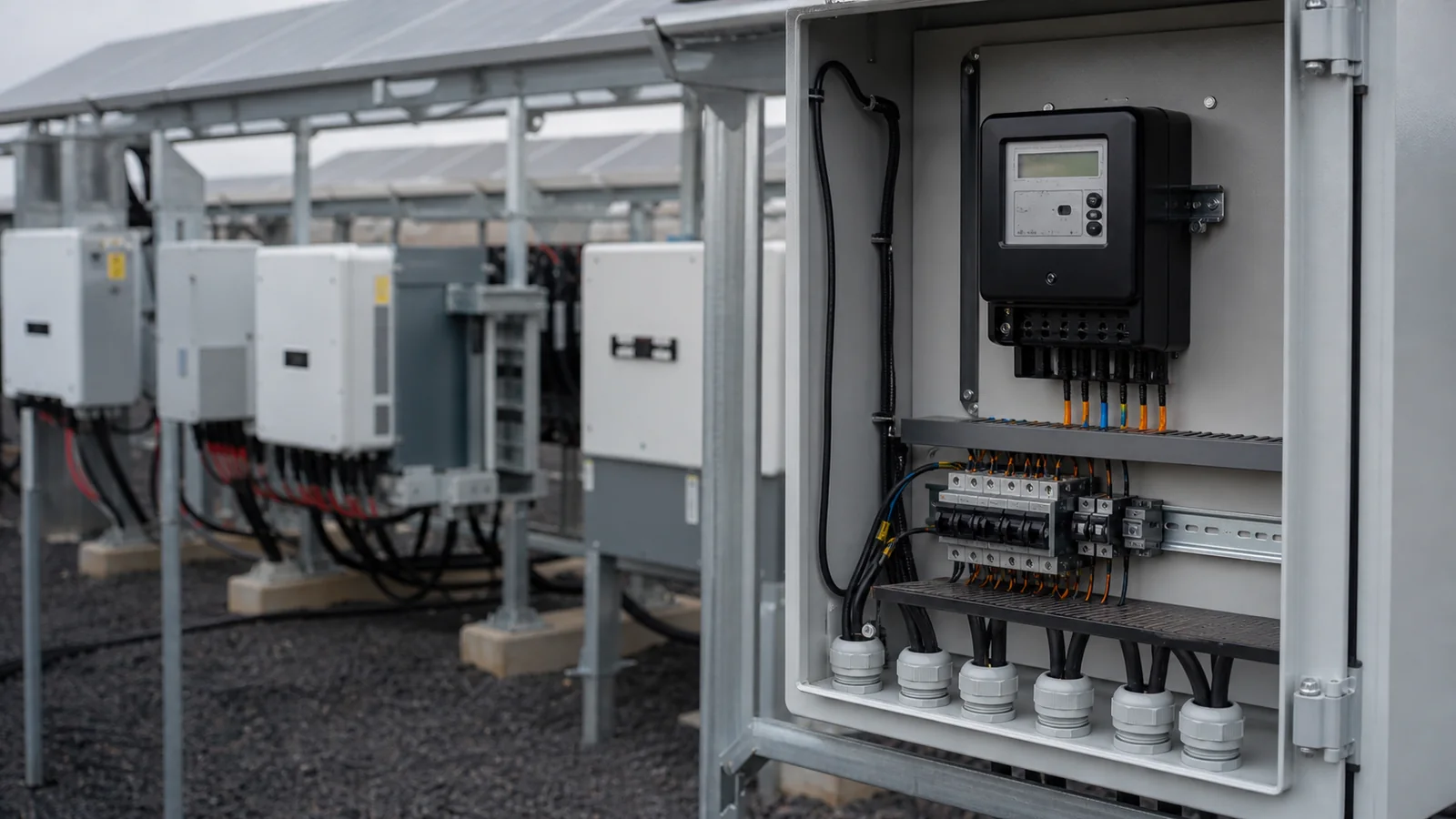
Energy data has value only when its operational context is intact
Energy estates are geographically distributed and operationally diverse. A meter in a municipal building, a pump controller, a battery enclosure, a solar inverter, a lighting cabinet, a generator room, and a substation gateway may each report a value-but the useful question is whether that value is current, credible, within an approved operating range, and connected to the responsible equipment and response procedure.
A cloud dashboard alone cannot guarantee that context. The remote link can be slow or unavailable, field equipment can be older than the reporting platform, and the local response may need to preserve evidence or notify a site team before any upstream system is reachable. An edge node provides a practical local boundary: it acquires data close to the source, validates expected updates, retains configured history, creates structured events, and exports only the defined information package.
Banalytics provides this local orchestration and monitoring layer through an Agent running on a Windows, Linux x86_64, or Linux ARM64 host selected for the site. The Agent connects devices and integrations, manages components and tasks, evaluates local events, and makes approved outputs available to dashboards and external systems. See What is Banalytics? for the platform overview.
Keep acquisition, interpretation, and authority distinct
| Layer | Responsibility | Examples |
|---|---|---|
| Field assets | Produce measured state, equipment status, or local control signals. | Energy meters, power-quality instruments, inverters, pump controllers, generator controllers, PLCs, relays, and environmental sensors. |
| Site edge node | Connect devices, timestamp readings, verify freshness, retain configured data, and expose local state. | Industrial PC, server, or ARM host running a Banalytics Agent close to the facility or cabinet network. |
| Local analysis and rules | Apply approved thresholds, correlations, calculations, or specialist-model outputs; create explainable operational events. | Unexpected consumption, stale meter data, enclosure condition, communication loss, load trend, or a maintenance exception. |
| Operational handoff | Deliver selected context to the responsible people and systems. | Building-management system, SCADA or energy-management integration, maintenance workflow, dashboard, MQTT consumer, API, or historian. |
| Protected control authority | Retain the independently engineered functions that command or protect equipment. | Protection relays, safety controls, grid-control systems, certified controllers, and designated operating procedures. |
The separation is intentional. Banalytics can observe and orchestrate the data path around equipment, but it should not be represented as a substitute for protection systems, hard real-time controls, or the domain platform that holds statutory or engineering authority over switching, generation, or grid operation.
Start with a bounded local outcome
| Operational area | Local edge responsibility | Selected downstream outcome |
|---|---|---|
| Facility and building energy | Read meter and controller state, verify data freshness, retain local history, and flag defined operating deviations. | Consumption summary, exception event, maintenance request, or a data package for the building-management or energy-management system. |
| Water and pumping assets | Collect energy-related and equipment state from the local controller or meter; correlate it with permitted process context. | Abnormal operating condition, communication loss, evidence for investigation, and a governed notification to the responsible operator. |
| Distributed generation and storage | Maintain local visibility of approved telemetry and source freshness; make selected status available during imperfect backhaul. | Time-stamped status, availability or exception event, and a documented integration message for the system that owns dispatch or control. |
| Street lighting and public assets | Observe cabinet, meter, or gateway state across dispersed locations and identify devices that stop reporting. | Site-specific maintenance context, energy trend, and prioritised work list rather than an undifferentiated alarm stream. |
| Remote technical facilities | Run local acquisition and retention where connectivity is limited; monitor the health of the node itself. | Selected telemetry, local evidence, capacity warnings, and synchronised records when the link returns. |
Know whether a value is a measurement, an estimate, or a stale message
Energy deployments frequently mix modern gateways with long-lived field equipment. Modbus, MQTT, cameras, files, and local services can coexist at the same site. The edge layer should expose each interface as a documented contract instead of hiding units, polling behaviour, timestamps, and errors inside an alarm rule.
The Modbus Line component supports serial and network variants, multi-device polling, state tracking, and event generation. The embedded MQTT Server can provide a local publish/subscribe boundary for gateways and applications, while an MQTT Topic Listener turns an inbound message into a Banalytics event. For each source, define the unit, expected interval, timestamp source, calibration owner, acceptable range, quality flag, and missing-data behaviour.
That last point is essential. A meter value without a clear time and data-quality state can mislead an operator as easily as no value at all. Local rules should distinguish an out-of-range measurement from a normal value that has simply stopped updating, and they should preserve enough source context for a technician to investigate the actual problem.
Use local events to create useful operations, not more noise
Banalytics Event Manager evaluates configured conditions and invokes preconfigured actions. A rule can notify a responsible team, retain an evidence record, publish a concise MQTT message, or call an approved integration. The event contract should identify the asset, source, timestamp, value or state, data quality, location where relevant, severity, and expected owner of the next action.
The monitoring node also needs monitoring. Banalytics System Monitor publishes CPU, memory, disk, thread, media, WebRTC, and user-activity metrics as System state events. Pair node health with device freshness: a full disk, an unavailable meter, a stalled gateway, and a disconnected remote viewer are different conditions and need different runbook steps.
Local operation should continue through an upstream outage within its approved scope. The site can continue acquisition, local history, and event creation while the shared view is temporarily unavailable. When connectivity returns, the responsible team should be able to see which information was retained, which integrations were unavailable, and whether an intervention was already performed locally.
Use energy monitoring to extend scarce municipal capacity
For a small city or settlement, energy monitoring is often one of the highest-value first edge deployments. A small technical team may be responsible for municipal buildings, water assets, street lighting, and remote cabinets without a dedicated 24/7 control room. Local nodes at the few sites that cause the greatest service or cost risk can create early, credible maintenance context without requiring continuous raw-data transport or a city-wide data platform on day one.
The practical benefit is not simply a lower meter reading. It is the ability to distinguish a genuine abnormal condition from a stale device, a failed network path, or a constrained local host, then give the technician or contractor the exact site and evidence needed to respond. The companion paper Edge Solution for Small Cities explains how to apply this local-first model across limited budgets, small teams, and governed sharing with partner organisations.
Commission one accountable energy boundary before scaling
- Choose one operational outcome. Start with a facility, pump station, cabinet group, or generation asset that has a named owner and measurable maintenance or service objective.
- Document the data contract. List assets, interfaces, units, expected updates, retention, thresholds, data-quality rules, authorised recipients, and outage behaviour.
- Prove the local path. Test acquisition, freshness checks, local storage, event creation, and the intended response while the upstream connection is unavailable.
- Prove the handoff. Validate the dashboard, notification, SCADA/EMS integration, or maintenance workflow with the people who must use it.
- Exercise failure conditions. Simulate an unavailable meter, stale value, full disk, offline integration, and host restart; refine the runbook from the result.
- Replicate deliberately. Reuse the proven pattern where assets are comparable and record the deviations required by each facility, controller, or operating authority.
Energy edge computing is valuable when it makes local operations more trustworthy and easier to support. The objective is not to move every energy signal into one platform; it is to retain the evidence, context, and control boundaries needed for responsible action.