Transportation Edge
Local operational intelligence for vehicles, depots, stations, roadside assets, and distributed transport infrastructure.
Transport operations need reliable local context wherever people, vehicles, infrastructure, and changing conditions meet. Edge computing keeps acquisition, analysis, event creation, and evidence close to the operational boundary while sharing selected outcomes with dispatch, maintenance, safety, and passenger-information systems.
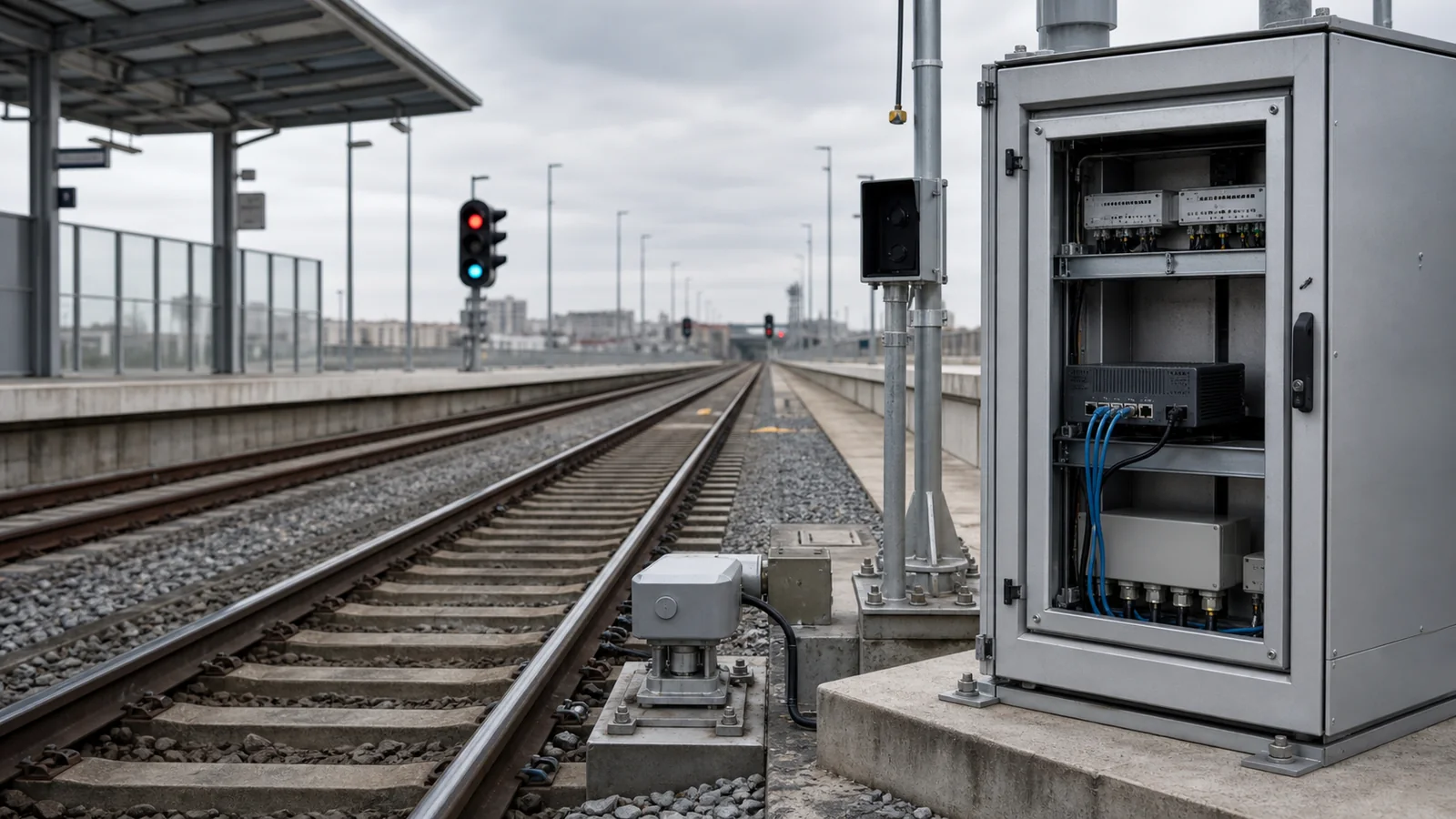
Movement creates local decisions before it creates central records
A transport estate is a network of physical locations and moving assets: vehicles, depots, stops, stations, gates, crossings, platforms, cameras, field cabinets, passenger facilities, and maintenance areas. Their connectivity is uneven, their operating conditions change quickly, and the right response is often tied to the exact location and equipment state rather than to a generic alarm category.
Central dispatch, fleet-management, passenger-information, and maintenance systems are necessary, but they do not need to receive every raw camera frame, sensor update, or controller poll before local context can be created. A transport edge node can collect defined signals, validate their freshness, retain approved evidence, create a structured event, and keep the local monitoring path available through a disrupted uplink.
Banalytics provides this local orchestration and observability boundary through an Agent on a Windows, Linux x86_64, or Linux ARM64 host. It connects approved devices and integrations, runs local tasks, evaluates events, and exposes selected information to dashboards and authorised systems. See What is Banalytics? for the platform overview.
Separate local situational awareness from movement authority
| Layer | Responsibility | Examples |
|---|---|---|
| Physical assets | Generate location, state, media, measurement, or machine signals. | Vehicle gateways, cameras, GPS integrations, doors, passenger counters, signs, controllers, sensors, barriers, and local network equipment. |
| Transport edge node | Acquire local inputs, timestamp and validate them, retain configured records, and create events. | On-board computer, depot server, station industrial PC, roadside enclosure host, or compact ARM device. |
| Local analysis and response | Evaluate bounded operational conditions and hand a defined result to an operator or authorised domain system. | Stale vehicle telemetry, depot equipment exception, camera observation, passenger-facility condition, or station connectivity issue. |
| Shared operations | Provide selected status to the teams and systems coordinating the wider transport service. | Fleet-management system, dispatch, maintenance workflow, dashboard, event history, MQTT consumer, API, or reporting platform. |
| Protected safety and movement authority | Retain systems that control a vehicle, signal, route, barrier, railway, or other safety-relevant function. | Vehicle control systems, signalling, train-control systems, traffic controllers, certified safety systems, and designated operating procedures. |
The distinction is fundamental. Banalytics can monitor, orchestrate, and integrate information around a transport operation; it must not be represented as a substitute for independently engineered safety controls, movement authority, driver responsibility, signalling, or statutory command systems.
Start with local outcomes that improve the service response
| Transport area | Local edge responsibility | Selected downstream outcome |
|---|---|---|
| Vehicle and fleet operations | Receive approved platform, sensor, or location telemetry; monitor freshness and local device health; retain the configured event context. | Current reported state, mission or maintenance exception, connectivity condition, and selected event package for fleet operations. |
| Depots and maintenance facilities | Connect local equipment, cameras, meters, and controllers; create time-stamped maintenance or availability events close to the asset. | Equipment-status change, inspection context, capacity warning, and work request for the responsible maintenance process. |
| Stations, stops, and passenger facilities | Observe approved field devices, environmental conditions, accessibility equipment, and permitted visual context. | Facility exception, evidence reference, selected occupancy or service condition, and an authorised operational notification. |
| Roadside or trackside infrastructure | Collect local gateway and sensor state, validate update intervals, and retain evidence during poor backhaul. | Source-specific event, data-quality state, and a controlled handoff to the responsible road, rail, or infrastructure operator. |
| Mobile inspection and response assets | Expose coordinates and mission data only when supplied by the device integration and authorised for the deployment. | Latest reported position, task progress, selected observation, and a visible stale-state marker when the source stops reporting. |
Put the event in its geographic and operational context
A map can shorten the route from an event to an actionable site view. An authorised operator can see an asset marker, a defined area, a camera or sensor component, and recent event state in one workspace. For moving assets, the map must distinguish the latest reported coordinate from a live confirmed position, retain the timestamp, and mark stale telemetry rather than implying current movement.
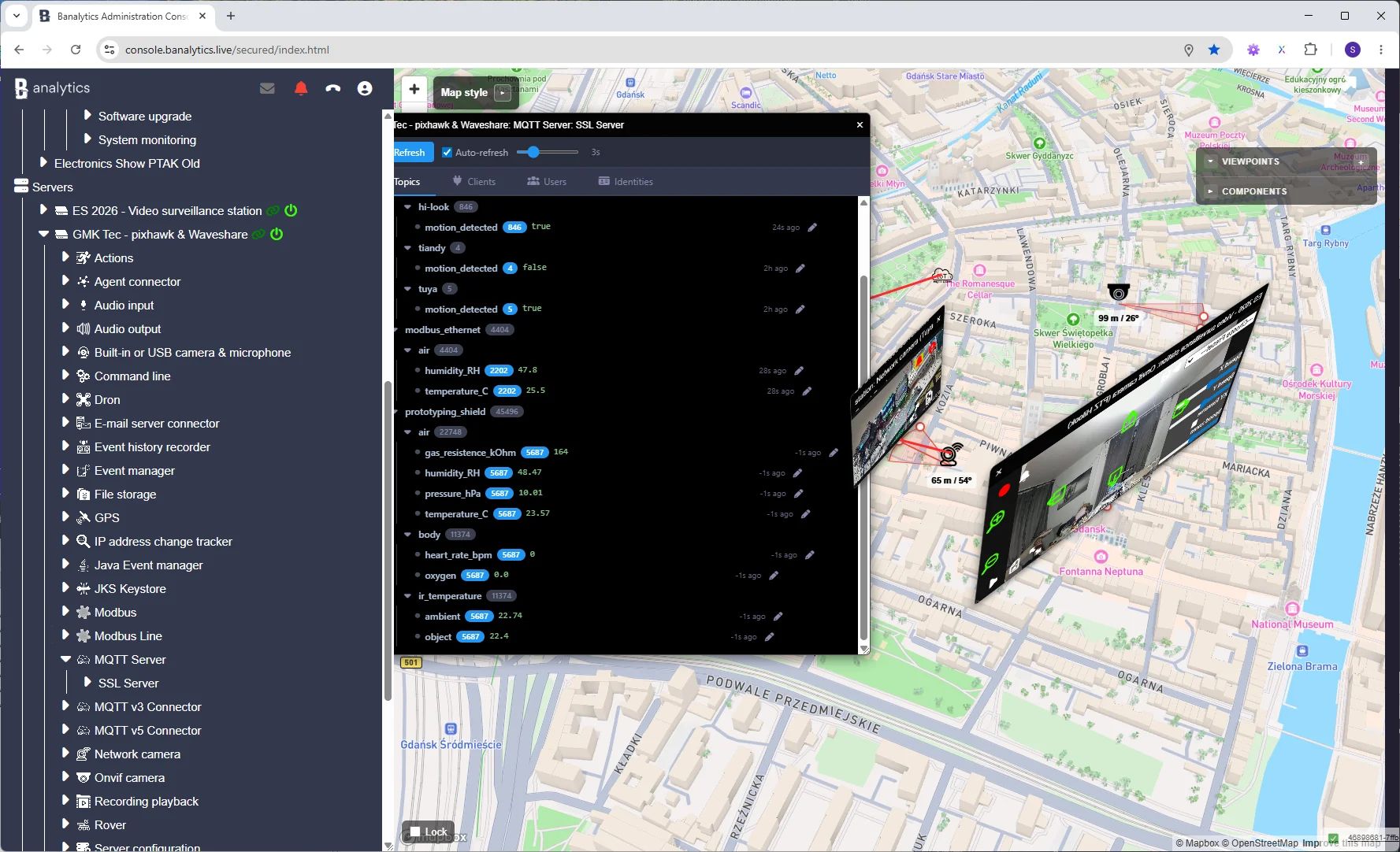
Banalytics dashboards are Agent-owned: their hierarchy, pages, access rules, and provider configuration are held with the Agent, while the portal provides the editor and viewer. Deployments can use the Mapbox, Cesium, or OpenStreetMap dashboard provider according to the required map context. Limit live positions, routes, and infrastructure details to the people and workflows that have a defined need to use them.
Make each transport interface explicit and observable
Transport systems may combine vehicle gateways, legacy controllers, station networks, specialist APIs, cameras, and enterprise services. The edge layer should expose a clear integration contract for each source and consumer: payload schema, source time, update rate, quality state, authentication, retention, expected outage behaviour, and the operational owner of the next step.
The Modbus Line component supports serial and network variants, multi-device polling, state tracking, and event generation. The embedded MQTT Server can provide a local publish/subscribe boundary for gateways and applications, while an MQTT Topic Listener turns a defined inbound message into a Banalytics event. A proprietary vehicle, dispatch, or signalling protocol should be represented by a controlled gateway or sidecar service, not assumed to be a native interface.
Deliver a small, useful event package to fleet, dispatch, maintenance, or passenger-information systems: source, time, location where permitted, state or measurement, quality, severity, evidence reference, and the response owner. The system of record for schedules, vehicle movement, tickets, passenger records, and safety operations remains the designated transport platform.
Monitor the node as carefully as the transport asset
Banalytics Event Manager evaluates configured conditions and invokes preconfigured actions. A rule can notify a team, retain a record, publish a concise MQTT message, or call an approved integration. Events should preserve enough context for the recipient to distinguish an actual service condition from a missing source or a disconnected external consumer. See Event Manager for the rule-and-action model.
Banalytics System Monitor reports CPU, memory, disk, thread, media, WebRTC, and user-activity state as System state events. Combine host health with source freshness: a full depot server disk, a stale on-board gateway, an unavailable camera, and a slow remote viewer are separate operating conditions with different recovery paths.
Authorised users can reach the required Agent context through Portal Integration without placing the portal in the local acquisition path. This supports remote diagnostics and multi-site visibility while station, depot, or vehicle-side monitoring continues within the intended local boundary.
Prove one transport boundary before scaling the service
- Choose one accountable operating outcome. Start with a depot system, station facility, vehicle class, roadside asset group, or inspection workflow with a named owner.
- Document the local contract. Define sources, device and payload semantics, location policy, retention, local rules, recipients, access roles, and outage behaviour.
- Prove the offline path. Test collection, source freshness, local evidence, event creation, and the intended local workflow while the upstream connection is unavailable.
- Validate the operational handoff. Confirm that dispatch, maintenance, or facilities users can interpret the selected event and reach the correct asset context.
- Exercise failure modes. Simulate stale telemetry, device loss, storage pressure, an unavailable consumer, and node recovery; refine the runbook from the result.
- Replicate deliberately. Reuse the pattern where assets are comparable, while recording the variations created by vehicle type, location, network, operator authority, or safety regulation.
Transportation edge computing is not a generic layer above every transport system. It is a local operating boundary that helps teams maintain trustworthy context around physical operations, then share the right result with the right system and responsible person.