Retail Edge Analytics
Local operational intelligence for stores, fulfilment areas, cold equipment, customer spaces, and distributed retail estates.
Retail analytics is valuable only when it improves a real store operation without making the store dependent on a remote data path. Edge computing keeps device acquisition, permitted analytics, event context, and local evidence close to each location while sharing selected outcomes with retail, facilities, logistics, and security workflows.
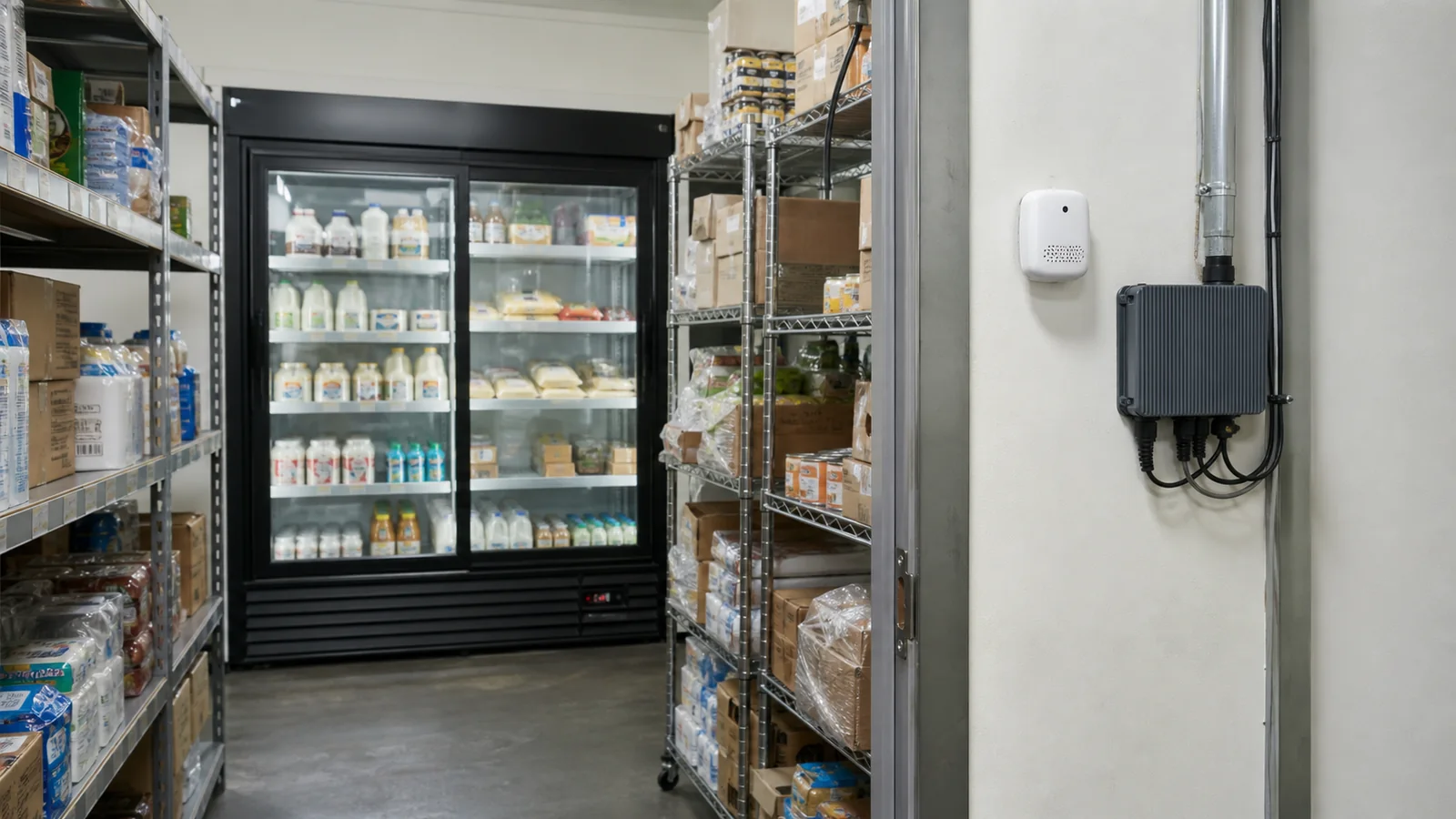
A store is a physical operation before it is a data source
Each store brings together customers, associates, stock, cold equipment, point-of-sale systems, cameras, delivery areas, network devices, and local maintenance needs. A retail group may operate hundreds of sites, but an individual store still needs to respond to a failed refrigeration sensor, a network problem, a delivery exception, or an approved visual observation even if the link to central services is unavailable.
Sending continuous video and every raw device update to a central service is not a substitute for local operational design. The store edge should acquire approved inputs, check whether data is fresh, retain configured evidence locally, create a structured event, and publish only the data package that a downstream process actually requires. This reduces unnecessary bandwidth and gives store or facilities teams a clearer path from a condition to a response.
Banalytics provides this local orchestration and observability boundary through an Agent on a Windows, Linux x86_64, or Linux ARM64 host. It connects devices and integrations, runs local tasks, evaluates events, and exposes selected results to dashboards and authorised consumers. See What is Banalytics? for the platform overview.
Separate local store operations from enterprise consumption
| Layer | Responsibility | Examples |
|---|---|---|
| Store assets | Generate state, measurements, media, identifiers, and local equipment signals. | Cameras, refrigeration controllers, environmental probes, shelves, doors, scanners, counters, network devices, and gateways. |
| Store edge node | Acquire inputs, validate freshness, retain configured history and evidence, run local tasks, and create events. | Store server, industrial mini-PC, or ARM host placed on the appropriate local network boundary. |
| Local operational logic | Evaluate defined conditions and hand a contextual result to a responsible person or system. | Cold-equipment exception, device offline state, delivery-area observation, approved queue or occupancy indication, and maintenance alert. |
| Retail and partner systems | Use selected structured outputs for business, facilities, logistics, or security workflows. | Facilities-management system, inventory or fulfilment workflow, maintenance platform, dashboard, MQTT consumer, API, historian, or analytics service. |
| Protected systems of record | Retain authority over transactions, payments, access, and security decisions. | POS, payment systems, inventory system of record, access-control platform, loss-prevention process, and corporate security procedures. |
The edge layer should enrich store operations, not silently become the system of record for a transaction, payment, customer identity, or security decision. Every integration needs an explicit owner, schema, retention rule, access scope, and reconciliation behaviour when an external consumer is unavailable.
Use local analytics where a store needs timely context
| Store area | Local edge responsibility | Useful downstream outcome |
|---|---|---|
| Cold equipment and food storage | Collect controller and environmental state, check source freshness, retain local trends, and flag defined excursions. | Time-stamped condition event, quality context, evidence reference, and maintenance or facilities handoff. |
| Delivery and receiving area | Combine approved equipment, sensor, and camera context around a local delivery or staging condition. | Selected delivery exception, site context, and an event package for store, logistics, or facilities workflows. |
| Customer-space operations | Run permitted local observations and turn them into bounded, explainable operational signals. | Occupancy, queue, equipment, or service-condition indicator where the purpose, privacy controls, and human response are defined. |
| Shelf, display, and equipment condition | Collect device or visual inputs, validate freshness, and retain the evidence needed to diagnose a real exception. | Maintenance signal, replenishment or display exception, and a controlled integration message for the responsible team. |
| Store network and edge capacity | Monitor host, storage, device, and remote-access health alongside the retail inputs. | Actionable diagnosis of a full disk, unavailable camera, stale gateway, or constrained remote viewer. |
Make the permitted purpose visible in the architecture
Retail environments can contain personal data, particularly where cameras, customer-facing devices, or staff workspaces are involved. The deployment owner must define the lawful purpose, sources, retention period, access roles, transparency obligations, and recipient for every data flow. A useful edge architecture makes these decisions enforceable by keeping raw inputs near the store and publishing only the selected event, aggregate, or evidence reference that the approved workflow needs.
Do not use an analytics signal as an automated customer, employee, payment, security, or disciplinary decision without the required legal, policy, and human-review controls. Where a project includes systematic observation of public or customer-accessible areas, the owner should assess the relevant data-protection requirements, including the need for a DPIA where applicable. Banalytics is an orchestration and observability layer; it does not determine the legal purpose of the deployment or the recipients of data.
Connect store devices with an explicit operational contract
Retail estates frequently combine legacy controllers, vendor gateways, cameras, store applications, and corporate services. The edge layer should represent each connection as a documented interface: source, units or payload schema, expected update rate, timestamp, quality state, authentication, retention, owner, and behaviour during an upstream failure.
The Modbus Line component supports serial and network variants, multi-device polling, state tracking, and event generation. The embedded MQTT Server can provide a local publish/subscribe boundary for gateways and applications, while an MQTT Topic Listener turns a defined inbound message into a Banalytics event. A proprietary POS, inventory, or retail API should be connected through a controlled integration with a named business owner, not implied as a generic platform feature.
Banalytics Event Manager evaluates configured conditions and invokes preconfigured actions such as a notification, retained record, MQTT publication, or approved external integration. The event should preserve its source, time, state or measurement, quality, location, severity, evidence reference, and expected response owner. See Event Manager for the rule-and-action model.
Support every store without centralising every raw feed
Banalytics System Monitor reports CPU, memory, disk, thread, media, WebRTC, and user-activity state as System state events. Pair node health with source freshness so that a full disk, disconnected cold controller, unavailable camera, and broken external consumer produce different, actionable operational signals.
Authorised users can reach a store Agent through Portal Integration without making the portal the mandatory path for local acquisition or processing. This gives central support a controlled operational view while each store retains its own local device and evidence boundary.
- Choose one store outcome. Start with cold equipment, a delivery area, a maintenance issue, or a bounded customer-space operation with a named owner.
- Document the data and response contract. Define sources, purpose, retention, event schema, external consumers, access roles, and outage behaviour.
- Prove the local path. Test acquisition, freshness, local evidence, event creation, and the intended store response without the upstream link.
- Validate the recipient workflow. Confirm that facilities, store operations, logistics, or the approved partner can interpret and act on the selected event.
- Replicate deliberately. Reuse the pattern where stores are comparable and document deviations for local equipment, policy, network, or customer-service conditions.
Retail edge analytics is successful when it reduces the time from a real condition to a responsible response, without creating an uncontrolled secondary system for customer, employee, transaction, or security data.